
Current location:Home > Blog > Dehumidifier Blog
Complete Guide to Choosing the Right Whole House Dehumidifier
Read Count:21 Update Time:2026-10-08 03:49:14
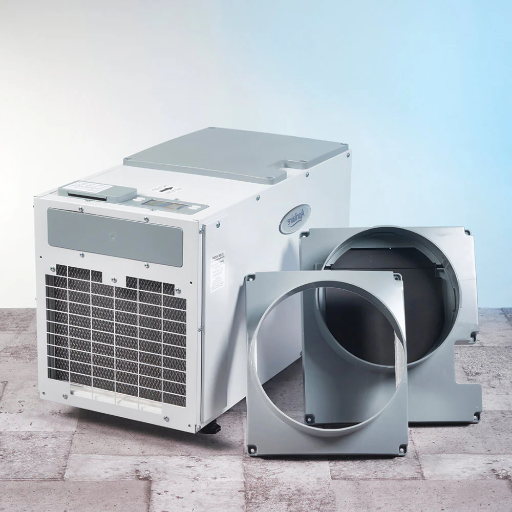
When humidity frequently increases in certain areas, it becomes necessary for the health and the preservation of dwellings to ensure balanced indoor air quality. This manual enlightens homeowners on choosing a suitable dehumidifier for their house. We will discuss what capacity means, energy efficiency and installation prerequisites, among other things, so as not to leave any stone unturned while looking at factors that determine the performance of a dehumidifier. Moreover, this paper will also explain the different kinds of dehumidifiers found in stores today and highlight their advantages. This knowledge equips individuals with the skills needed to make correct decisions towards creating better living conditions around them, even as they control amounts of moisture throughout the entire building.
What is a Whole House Dehumidifier?
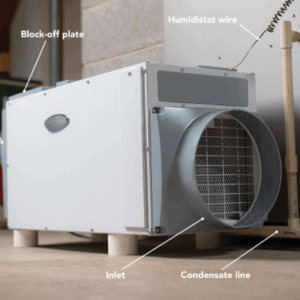
(whole house dehumidification systems)
How Does an Entire Building Dehumidifier Function?
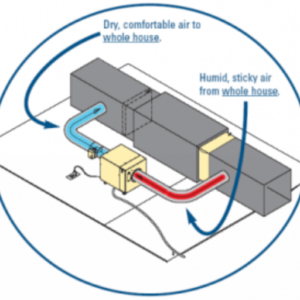
An entire building dehumidification unit works by sucking moistened atmosphere from different chambers within a home either through one central duct system or via an exclusive return venting facility. As soon as air enters such a device, it passes over some refrigerant-cooled evaporator coils, where it gets colder. Moisture droplets are formed when warm, damp air comes into contact with these freezing tubes; this condensed water is collected in a tank or released through a drain pipe network connected to the unit. Then reheat treated dry fresh is circulated back again into living areas thus lowering levels of internal humidity. This operation makes people feel more comfortable but also stops mold from growing due to dampness elimination, along with other airborne allergens like mildew spores, ensuring healthier conditions are maintained indoors.
Advantages of Using Whole House Dehumidifiers
Using whole-house dehumidifiers has many benefits, including improved indoor air quality, energy efficiency, and structural soundness.
- Better Air Quality: These dehumidifiers work by keeping humidity at the proper level between 30% and 50%. This significantly reduces mold spore growth, such as mildew and dust mites, that thrive in high-moisture environments. Therefore, they create a cleaner, breathable atmosphere, especially for asthmatics or those with allergies.
- Increased Comfort: A dehumidifier makes the environment more comfortable. High humidity makes a room feel hotter than it is, requiring extra cooling. Therefore, lowering the humidity level in a room can contribute to better living conditions and may also reduce dependence on AC systems.
- Protection of Home Structure: Too much dampness damages buildings, such as wood rotting and paint peeling. By controlling moisture within acceptable limits, these appliances protect materials used for construction from such hazards, hence increasing the durability of houses.
- Energy Saving: Another good thing about these machines is that they save energy. They regulate heating and cooling systems through proper humidity management, reducing their workload and allowing them to perform efficiently. For example, average power consumption could be indicated by ‘1.8 L/kWh’, i.e., every liter removed consumes 1.8 kilowatts per hour.
- Prolonged Life Span Of Appliances: Also, entire home dehumidification systems can help you save money on appliance replacement costs, too! For instance, refrigerators or washing machines tend to last longer when operated under controlled internal wetness levels since higher amounts shorten their service lives due to wear caused by continuous usage under strenuous conditions brought about by humidities above recommended values.
To sum up, one should consider purchasing whole-house dehumidifying equipment because it improves air quality, helps ensure comfortability, prevents structural problems caused by moisture damage, saves energy, and extends the lifespan of household items.
Whole House Dehumidifier vs. Portable Dehumidifier
Several factors are used to evaluate whole-house dehumidifiers versus portable units, such as efficiency, coverage area, and long-term costs. Based on my observation, I noticed that whole-house dehumidifiers work with the HVAC system and can control humidity in all parts of a home, usually up to 2,500 square feet or more. These large sizes mean they remove moisture evenly everywhere, which is measured by their ability to eliminate between 70 and 150 pints of water daily.
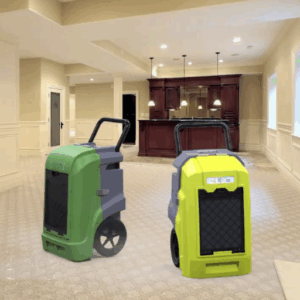
On the other hand, portable dehumidifiers are designed for smaller spaces; hence they typically remove about 30-70 pints daily. Although they may be useful when dealing with specific humidities in limited places, their power decreases as one moves from one point to another over larger areas. For instance, if you rely entirely on these gadgets in your big basement, some sections will remain wet since the moisture absorbers cannot reach them, thus encouraging mold development.
From an economical standpoint also there’s also a need for consideration of operational costs involved too. It can cost you more initially to acquire a whole-house dehumidifier compared to several portable ones whose prices range around $1200-$3500 depending on the complexity of installation and specifications used, respectively. But then again, their designs save energy, which translates into low utility bills over time, making them quickly recover investments than having many portables running frequently. Moreover while low-cost at first ($150-$300 typically); maintenance like daily emptying of water collected and changing filters has to be done regularly for each portable dehumidifier thus accumulating expenses eventually.
In summary, therefore, what counts many when it comes down to controlling indoor moistness is evaluating these considerations wisely because both systems work differently towards achieving desired results. Whole house models cover wider areas besides being energy savers, whereas mobile units could serve particular needs but at higher operational costs in the future, plus varying performances. What you choose finally depends on where u live and what issues humidity poses.
How to Choose the Right Whole-Home Dehumidification System
(whole house dehumidification systems)
Things to Think About Size, Capacity, and Coverage
In buying a whole-house dehumidification system, I think of size, capacity and coverage. The unit’s size should match the square footage of my home; if it is too small, it will not be able to keep moisture at proper levels, but if it is too big, there can be frequent on–offs, which increases tear and wear inefficiency. I also look at how much volume (in pints per day) the system can handle, i.e., its capacity vis-à-vis particular environmental dampness problems, especially during wet seasons. Finally, what area can this device cover? It ought to serve all rooms well, including basements where many parts may have high humidity levels, such as crawl spaces. With these considerations in mind I will ensure that my investment addresses unique needs for controlling moisture in different parts of the house.
Energy Efficiency and Energy Star Ratings
While considering energy efficiency, I give more weight to units that have been rated by EPA under their Energy Star program because they are designed in compliance with strict guidelines set forth by U. S.An Environmental Protection Agency towards saving power used for dehumidifiers. This means when you buy an Energy Star-certified appliance not only does it save on electricity consumed during operation but it also leads into lower utility bills over time; additionally, selecting models having higher EERs helps ensure effective removal while minimizing energy cost e.g., those whose ratio is 3 or above indicate a good balance between power consumption and amount extracted so far. By caring about energy efficiency, therefore, I can save more money every month while conserving the environment for future generations.
Important Features to Consider in a Whole House Dehumidifier
To identify the right whole-home dehumidifiers on reputable consumer websites, I look for several key features that increase usability and efficiency.
- Energy Efficiency Ratio (EER): When shopping for units, I want a high EER rating because it means they use less electricity to remove moisture. This measure becomes even more important when considering cost savings in areas with excessive humidity. For example, an EER of 2-3 signifies that such device can eliminate 2-3 pints of water per kilowatt-hour (kWh) consumed.
- Built-in Humidistat: I prefer models with this feature, which automatically turns on and off as needed depending on set humidity levels. This saves energy by not letting them work beyond necessary while keeping steady ambient moisture all around the house.
- Drainage Options: I check what kind of drainage mechanisms are in those appliances. Units with continuous drainage systems can get rid of excess liquid through a direct pipe into the drain without any manual assistance. Otherwise, one would have to regularly empty a collection tank, which might be inconvenient or even impossible sometimes.
- Noise Level (dB): These devices are designed for domestic use and should operate quietly enough not to disturb people going about their usual business at home. That is why I try to find items producing no more than 50 decibels (dB) during operation—so that they work silently throughout the day and night.
- Filter Type and Maintenance: I would like them to have filters that can be washed or replaced because this improves air quality and cuts down costs associated with maintenance procedures. a preferable option, among other things, would be a HEPA filter, as it captures airborne allergens, thus creating a healthier indoor environment overall.
Considering these technical aspects will help me choose the right whole-house dehumidifier, which will well suit my needs and ensure both efficiency and effectiveness in moisture management.
Installation and Maintenance of Whole House Dehumidifiers
(whole house dehumidification systems)
DIY Installation vs. Professional Installation: Differences in Approach
When deciding whether to do a whole-house dehumidifier installation by myself or hire professionals, I compare and contrast the two methods from technical demands as well as long-term results perspectives. DIY can be an option for people with intermediate skills in home improvement because many manufacturers have very explicit instructions plus all required tools. This could save a lot of money and also make one proud of themselves. However, I believe professional installations ensure compliance with building codes; they also helps ensure correct positioning (which is important) and integration into existing HVAC systems, thereby avoiding possible future operational problems caused by inefficiencies during installations. All things considered, though, I know how much money can be saved through doing it on my own, but these technicians should always handle complex systems since such actions validate warranties while ensuring proper functioning, thus protecting investments made towards them. It’s therefore important to balance skillfulness and cost-effectiveness for achieving suitable indoor air quality.
Maintenance Hacks For Better Functioning Every Other Time
To keep my whole-house dehumidifier working at peak performance, I follow strict maintenance routines that involve regular checks and specific cleaning exercises. Firstly, every three months or when necessary, basing on the manufacturer’s instructions, I inspect and change the air filter since this simple act can lead to massive savings in power consumption levels due to up to 15 percent reduction caused by blocked filters that hinder airflow.
Secondly, after six months have elapsed from the initial purchase date, it becomes mandatory that I thoroughly inspect the condensate drain line to prevent blockages, which may result in water damage in the vicinity of the device. To achieve continuous drainage free from obstructions, a wet/dry vacuum cleaner should always come in handy during removal exercises alongside other debris removal methods if needed.
Thirdly but not least, an important part of this comprehensive procedure involves annual evaluation of evaporator and condenser coils. Dirty coils can increase energy usage by up to 30 percent, so cleaning them using mild soap mixed with water is advised. However, extreme care must be taken so that no fin gets damaged during this exercise.
Additionally, performance tracking should be maintained near the dehumidifier itself through use of a hygrometer to check humidity levels within my house. It is crucial to keep indoor humidity between 30%-50% at all times to avoid mold growth and ensure a comfortable living environment. In case there are noticeable fluctuations, troubleshooting becomes necessary where one should examine how well the unit operates, among other things like settings, just to fix any detected problem in time. Such rigorous maintenance not only extends life expectancy for such appliances but also increases energy-saving capacity, thus affirming my dedication towards efficient management of IAQ systems.
Problems That Are Common and Their Solutions
In my experience with dehumidifiers, several problems can arise when using them. Here I’ll go over a common ones and give detailed explanations about what causes them based on top sources:
- Not Enough Humidity Being Removed: When my dehumidifier fails to maintain the set humidity level, I check if the device is sized for space. Some common specifications to look at may include the capacity of the unit in pints per day (e.g., a 30-pint dehumidifier can cover up to 2,000 square feet). Also, make sure that the air filter and coils are clean since dirt can greatly affect their effectiveness.
- Cycling On/Off Too Often: If it starts turning itself off and back on again in quick succession, see if there’s any frost forming on its coils. This shows that it might be operating under lower-than-normal ambient temperatures (below about 60°F). In such cases, ensure that you have put your dehumidifier in an appropriate place because many models won’t work properly unless certain operational temperature ranges are met.
- Making Too Much Noise: When faced with loud or unfamiliar sounds coming from my machine, I generally check both fan and compressor units for debris accumulation or misalignment. Depending on the model being used, residential units should produce between 40 and 50 decibels during operation—anything louder than this could indicate an imminent mechanical failure, thus requiring immediate attention.
Following these troubleshooting steps systematically while observing technical recommendations gives me confidence in achieving peak performance and efficient moisture management within my surroundings.
Whole House Dehumidifiers in Different Home Areas
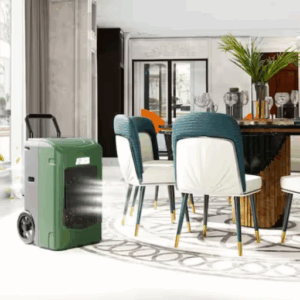
(whole house dehumidification systems)
Application of Dehumidifiers in Basements and Crawl Spaces
My initial step when using dehumidifiers in basements and crawl spaces is to measure the relative humidity levels in these areas. Generally, being underground makes basements prone to high levels of moisture, leading to problems like mold growth and structural damage. Depending on the square footage and moisture load, I choose a dehumidifier with an appropriate capacity usually going for higher pint units for larger spaces or extremely wet conditions. Additionally, I make sure it is placed strategically far from walls and other obstructions so that there can be maximum airflow around it thus enhancing its performance.
For crawlspaces where low temperatures are common due to restricted accessibility and ventilation, among other issues, I select those designed for this kind of operation. They are made in such a way that they work effectively even under cold environment thereby still operating below normal dehumidification temperatures. Air filters need regular checkup hence should be inspected frequently enough besides replacing them always if required since failure does affect efficiency adversely. Moreover, my intention is also to make sure both basements (s) remain dry throughout by preventing any form of molds from growing within them while at the same time improving the overall home’s air quality by getting rid of unwanted dust particles that might have been brought about by dampness.
Whole-House Dehumidification
In order to achieve whole-house dehumidification, I first assess average quantities of moisture present across different living spaces within my house. This approach enables me identify areas which need specific attention thereby allowing for adjustment in the strategy used towards achieving uniformity during this process all over the structure concerned. I usually employ an HVAC-integrated full-home dehumidifier system so as to keep air moisture consistent within various rooms or sections without having any negative impacts elsewhere.
Importantly however is picking right size depending on measurements taken while considering recorded moisture levels exactly where said unit shall be installed for high possible performance levels at any given time. Moreover, continuous removal of wetness from the air can only be achieved if the central type is installed, thus killing two birds with one stone. Apart from improving IAQ, it saves energy too due to its ability to work continuously, unlike other types that have to be switched off and on regularly. In order to ensure that such equipment remains effective, we should always keep checking humidity set points while cleaning various parts of the system during scheduled maintenance as failure may lead reduced lifespan through inefficiency. Finally, keeping humidity level between 30-50% helps prevent the growth of mold within houses as well enhancing comfortability by creating a better living environment with a good quality indoor atmosphere.
Special Thoughts for High Humidity Zones
I adopt specific dehumidification methods when dealing with high-humidity parts of my house, such as basements, bathrooms, and kitchens. For starters, these areas usually accumulate more moisture than other spaces due to poor aeration or proximity to water points. Consequently, I give precedence to setting up heavy-duty energy-saving dehumidifiers for use in such places. According to my readings from various authoritative industry sources, the appliance should be able to draw at least 70 pints every day which is standard for spaces larger than 1500 sq ft or where there is constant excessive humidity.
Moreover, I also keenly look at technical specifications like its energy factor; this shows how well it removes moisture regarding power consumed. Anything above 1.8 L/kWh would be suitable since it indicates lower running costs without compromising on effectiveness. Additionally, all through its operation, noise levels must not exceed 50 decibels so that quietness is maintained within living areas, thereby creating a conducive environment for habitation. Programmable timers could be used to save energy while keeping desired humidity levels, or better still, if they are fitted with smart controls that enable me to set off-peak periods during which these gadgets should work. With all these steps taken into consideration, I am able to deal effectively with too much moisture content within highly humid regions, thus protecting against mold and structural damages at home.
Improving Indoor Air Quality with a Whole House Dehumidifier
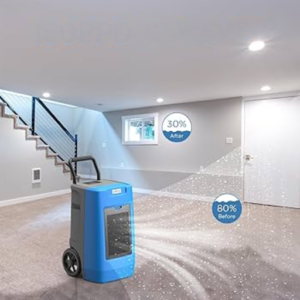
(whole house dehumidification systems)
How Dehumidifiers Help with Allergy and Asthma
In my opinion, utilizing a whole house dehumidifier has been very effective in dealing with allergens and asthma triggers caused by high levels of humidity. Firstly, keeping moisture levels below 50% inhibits the growth of mold spores, known to be common irritants for people living with allergies and asthmatics. Dust mites also thrive in damp conditions; therefore, lowering humidity through strategic operation of the device helps create an environment less conducive to these allergens, thus reducing the frequency and intensity of allergic reactions or asthmatic attacks among members of my household.
Furthermore, these machines also work by removing excess moisture from the air, thus making it safer for breathing indoors. Particularly notable experts say that when you control relative humidity within certain limits, there will be fewer respiratory problems because this promotes healthy living spaces. Additionally, lower moisture content enhances the efficiency of air conditioning systems, which in turn circulates dry, clean, fresh air throughout homes, thereby benefiting individuals with sensitivities towards respiratory diseases such as asthma. Ultimately, I adopt proactive measures like using high-capacity dehumidifiers so that every person can live comfortably under one roof while breathing safe, uncontaminated oxygen.
Preventing Mold and Mildew Growth
Based on what I have gone through myself over time; keeping indoor dampness at bay is very important if we are to prevent molds from growing inside our homes – this calls for installation full house de-humidifying units. It should be noted that these fungi love areas where there is a lot of moisture content, such as basements, since they require an environment with over 60% humidity level, so any room’s wetness must not exceed 50% RH; otherwise, you risk creating favorable conditions under which they breed easily. To ensure their total eradication, it becomes necessary to employ hygrometers for monitoring alongside operating them effectively all around the clock. Additionally, a good ventilation system should be implemented in places like bathrooms and kitchens, which are more likely to experience dampness; this will work hand in hand with a dehumidifier, thereby reducing or eliminating mold formation and creating healthier indoor spaces for my loved ones.
Balancing Indoor Humidity for Better Health
In order to achieve healthy living conditions, I have discovered that keeping relative humidity levels between 30% – 50% RH is many suitable. This range has been found through various studies done by researchers worldwide. It discourages allergen growths like dust mites and ensures one does not suffer from dryness or too much moisture content in the respiratory system. Therefore, I use advanced instruments for monitoring and adjusting settings on my dehumidifier to attain atmospheric comfort, which minimizes chances of getting respiratory infections. Apart from this, there are times when seasons change because during winter, heaters tend to make the air dry, necessitating additional humidification methods that can help counteract such effects, thus fostering general health among people living within my home.
Frequently Asked Questions (FAQs)
Q: What is a whole-house dehumidifier?
A: A whole-house dehumidifier is a system that removes moisture from the air in your home and helps control humidity levels, thus improving indoor air quality.
Q: How does a whole-house dehumidifier work?
A: Whole-home dehumidifiers operate by drawing in humid air, extracting its moisture content, then releasing drier air back into the house either through existing HVAC systems or dedicated ductwork.
Q: What size dehumidifier do I need for my home?
A: The square footage of your house and degree of dampness determine what capacity (in pints per day) of full-size residential units you require; therefore, measure space and assess humidity levels accurately.
Q: Can I use my whole-house dehumidifier alongside the central air conditioning system?
A: Yes! By using it together with your AC unit, you can keep the entire home at comfortable humidity levels all year long. This will also help get rid of excess Moisture during summer months when cooling loads are high.
Q: What should I look for in a crawl space dehumidifier?
A: When selecting one for crawlspaces, consider features such as automatic defrosting capability (auto-defrost), energy efficiency ratings like Energy Star Efficient designation, and whether or not there’s an option available with a built-in pump and drain facility, making it easy to empty collected water.
Q: How often should I empty the tank on my portable humidifier if it doesn’t have an auto pump-out feature?
A: You will need to empty it manually a lot more often. Depending on the humidity levels, this could vary from once a day to several times per week.
Q: Are there commercial-grade dehumidifiers with pump options available?
A: Yes, in fact, these types of units are designed for continuous use and usually come equipped with a condensate pump built-in; they’re also great for larger rooms or spaces where high-capacity extraction is required, such as warehouses and factories.
Q: What’s the difference between whole-house and portable dehumidifiers?
A: Whole-house units are installed into your central air conditioning system, while portable ones can be moved around the home from room to room. The latter is suitable for small areas.


