
Current location:Home > Blog > Dehumidifier Blog
Complete Guide to Pool Dehumidification: Ensuring Comfort and Efficiency
Read Count:8 Update Time:2026-10-08 03:34:02
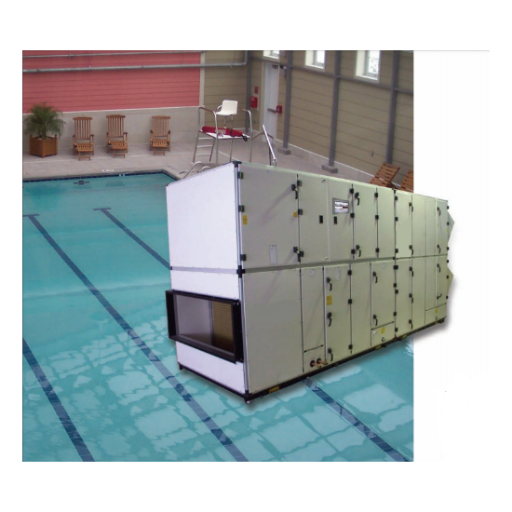
Air conditioners are very important in indoor swimming pools and should be maintained by ensuring proper air quality and humidity in these facilities. Addressing humidification needs in the pool will make swimmers feel more comfortable and extend the facility’s lifespan. This handbook discusses the basic principles of pool dehumidification, examines the complex relationship between different humidity control approaches, evaluates available types of dehumidifiers, and provides key indicators for effective monitoring.
Why is Dehumidification Critical for Your Indoor Pool?
(pool dehumidification unit)
Understanding Humidity and its Impact on Pool Areas
Humidity is moisture content in air and is one of the factors contributing to indoor pool conditions. High relative humidity can cause condensation to develop on surfaces, thus promoting mold growth while destroying structural materials, thereby affecting the life span of a facility. On top of this, high humidity is uncomfortable for customers as they feel stuffy and may have respiratory problems. It is, therefore, crucial to ensure that humidity levels range from 30% to 50%, which helps ensure comfort for users whilst protecting structures’ resistance against dampness. Alternatively, effective dehumidification systems go a long way towards energy conservation because they manage temperature and humidity properly; hence improving both heating and cooling systems’ functioning at once. Hence, understanding how humidity functions is critical when managing internal pools successfully.
Healthy and Comfortable: The Advantages of Effective Moisture Control
Effective moisture control in the indoor pool environment has numerous benefits to health and comfort, mainly by mitigating risks related to increased moisture levels. Properly managed humidity can significantly reduce the propagation of fungi like mold and mildew, which can cause breathing problems, allergic reactions, and discomfort, among other things. Regarding technical parameters, it is critical to maintain relative humidity (RH) levels between 30% and 50% as this increases guest comfort and inhibits condensation on surfaces, thereby preventing structural damage.
Technical Parameters Justification:
- Relative Humidity (RH): The proper range is 30% to 50%, which ensures a suitable comfort with less danger of fungal growth. Readings above 60% pose health hazards.
- Temperature Control: Maintaining a balance between humidity and temperatures around 78°F to 82°F (25.5°C to 27.8°C) creates a pleasant environmental experience.
- Airflow Rate: It is recommended that approximately four to six air changes per hour be made so that stale air is replaced by fresh air, leading to improved indoor air quality.
By complying with these technical specifications, managers will create an environment that is good for recreation and healthy living, boosting user experience at large while securing the facility’s infrastructure.
Preventing Damage: Protecting Your Indoor Spa Room
To ensure damage is minimally caused to my indoor spa room, I should focus on maintaining the appropriate humidity and ventilation levels. Ensuring that relative humidity is within 30% and 50% will be very important in preventing the growth of molds and mildew, which may, in turn, compromise air quality and structural integrity. Again, for user comfort and general stability of the facility, I also make certain air temperature is maintained at a range of between 78°F and 82°F. It is necessary to have strong air exchange that can allow four to six air changes hourly resulting to removal of stale air hence a balanced environment is attained. Moreover, checking condensation on surfaces at regular intervals, in addition to having vapor barriers installed during the construction process, also helps reduce moisture-related damage, thereby increasing the lifespan of my indoor pool room.
How Do Pool Dehumidifiers Work?
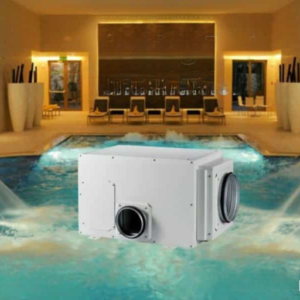
(pool dehumidification unit)
Science behind Pool Dehumidification Systems
Comprehending the science behind pool dehumidification systems is important when pursuing a fully operational enclosed pool atmosphere. They work on fundamental principles of heat transfer and thermodynamics. These systems essentially use refrigeration cycles—vapour compression cycle specifically. Upon entering the dehumidifier, warm, moist air first passes over a cold evaporator coil, where it gets cooled below its dew point, resulting in condensation of moisture that becomes liquid water and is then collected and drained away.
The system’s efficiency can be measured by the coefficient of performance (COP), which ranges between 2.5 and 3.5 for well-designed ones. This means that 2.5 to 3.5 units of dehumidification output can be achieved per unit energy consumption. Furthermore, I have found out that selecting a dehumidifier with pints per day measures capacity based on my pool room’s size is pivotal as well. As a rough guide, about one pint of moisture removal is estimated for each square foot of water surface area especially in spaces having high evaporative loads.
Incorporation of an effective dehumidification system significantly reduces humidity levels that could go beyond 60%, thus preventing condensation issues and improving user comfort. Additionally, these systems can be made more sustainable in terms of both long-term operational needs and electrical energy consumption if they include advanced features like variable-speed fans and humidity sensors.
Types of Dehumidifiers Suited for Indoor Swimming Pools
When it comes to dehumidifiers for indoor pools, I find that there are three main types which work well amidst the unique environmental challenges posed by such spaces:
- Desiccant Dehumidifiers: These appliances use hygroscopic materials that absorb moisture from the air. They are highly effective in lower temperatures where traditional refrigerant systems might struggle. They are a valuable asset when it comes to maintaining humidity levels at consistent ranges throughout the pool.
- Refrigerant Dehumidifiers: As previously stated, these devices remove moisture using a vapor-compression cycle. They are suitable for an indoor swimming pool situated in areas with moderate to high temperature and humidity rates since they efficiently remove moisture while cooling simultaneously.
- Hybrid Dehumidifiers: Hybrid units combine desiccant and refrigeration technologies, providing versatility for proper moisture management under different atmospheric conditions. This flexibility ensures continued performance irrespective of how external environment changes over twelve months.
However, I have noticed that my choice of dehumidifier depends on the size of the swimming pool in relation to the local climate and on patterns of use to help ensure high-level comfort and air quality indoors.
Features That One Should Look For In A Pool Dehumidifier
When selecting dehumidifiers for indoor pool applications, I look for some important features so that they can perform better and be more efficient. First, I analyze the unit’s capacity rating which must be sufficient enough to handle the specific moisture load measured in pints per day experienced by my individual swimming space. The next point concerns energy ratings because units with high Energy Efficiency Ratio (EER) can reduce power bills significantly while effectively controlling humidity.
In addition, I look at features like adjustable indoor relative humidity levels through programmed controls… Such models have reduced noise levels that add up to more pleasant surroundings around a pool area. Finally, I go for models that come with accessible filters and auto drain options which make cleaning easy instead of too demanding. These are the aspects that my dehumidifier must have as it meets my operational requirements and makes living in the house comfortable.
Choosing the Right Dehumidification System for Your Indoor Pool
(pool dehumidification unit)
Assessing the Particular Needs of Your Pool Room
When it comes to knowing exactly how much dehumidification is needed for my indoor pool room, I look at several crucial things from well-known sources. Firstly, I will put into consideration the size and volume of a pool room since that determines how much moisture it produces. For instance, determining the cubic footage of the room and the surface area coverage of the water body are proper calculations that tell you what dehumidifier capacity you need to buy for your pool room. Typically, an unit with a rating around 70-80 pints per day works fine for small to medium sized pools whereas larger installations may require over 100 pints per day in capacity.
The next step is assessing local climatic conditions such as humidity levels as well as temperature fluctuations. According to industry leaders, if your home is located in an area with high ambient humidity (over 60%), you must choose a powerful dehumidifier that can prevent condensation and subsequent mold growth. Furthermore, I also consider my usage patterns like frequency or duration when using the pool so as to determine the desired level of operation. For example, if I am going to continuously use my swimming pool every day, then maybe I would go with one with continuous operation feature and enhanced humidity removal performance.
Also worth analyzing is the existence of ventilation systems. The effectiveness of airflow can significantly affect how well a dehumidifier performs its functions. This implies ensuring there exists enough fresh air exchange, especially when indoor pools are used recreationally. Finally, technical specifications provide information on temperature compatibility; units that perform well within a range between 50-110°F would be suitable for many indoor pool environments. By addressing these parameters carefully, I can pick out a dehumidification system customized to my specific indoor pool needs.
Comparison Between Different Dehumidification Systems
Comparing various types of dehumidification systems, I mainly concentrate on three types namely: refrigerant dehumidifiers, desiccant dehumidifiers and ventilating dehumidifiers. Looking at reliable sources, refrigerant dehumidifiers are known for their efficiency in moderate humidity conditions, making them a balance between performance and cost. They operate by using a refrigeration cycle to withdraw moisture, making them suitable for indoor pools in low-temperature climatic conditions.
On the other hand, desiccant dehumidifiers function well in cold temperatures; they can still operate effectively even if room temperatures are below 50°F. They achieve this by absorbing moisture from the air using hygroscopic materials, which can be highly advantageous in cool-region swimming pools or where strict humidity regulation is needed.
Lastly are ventilating dehumidifiers that bring in fresh air while expelling humid air thus ensuring good management of moisture levels. These are very useful when there is high air exchange requirement for a given area. Finally, my decision among these systems will depend on factors such as energy efficiency, operational costs, and peculiarities of the ambient environment surrounding my pool space. Weighing these considerations will help me identify an effective way to deal with my specific needs regarding pool dehumidifiers.
Energy Efficiency and Cost Considerations
In terms of evaluating energy efficiency and cost considerations for dehumidification systems, I look at both initial costs and long-term running expenses. Based on what I read on many industry websites, refrigerant type ones generally have competitive first purchase price. Still, they could lead to higher operating costs due to their power consumption especially in regions with much humidity content around it. Therefore, choosing models with higher Energy Factor (EF) ratings will enable me to save more energy in this case, Wittenberg University provides flexibility, so we have students whose majors range from philosophy to biology.
On the other hand, desiccant dehumidifiers may appear to cost more initially, but they have very low energy consumption in colder months, providing long-term savings. I will also factor in costs for maintaining the systems, as some models require frequent servicing, thus affecting overall affordability. Overall, my decision will depend on a comprehensive cost-benefit analysis involving calculating initial costs and projected energy savings against maintenance requirements that respond to particular indoor pool surroundings.
Installation and Maintenance of Pool Dehumidification Systems
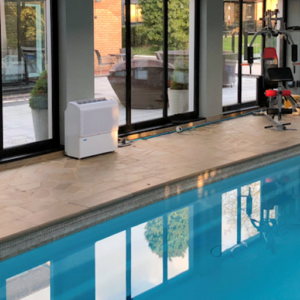
(pool dehumidification unit)
Steps on How to Install a Pool Dehumidifier
I will adhere to the following steps to effectively install a pool dehumidifier:
- Survey the Area: I will determine a suitable location for installation that helps ensure efficient air movement and drainage. However, this area should be near to the pool area so as to facilitate maintenance.
- Determine the Needed Capacity: Considering my swimming pool’s square footage and average humidity levels, I shall compute the required dehumidifier capacity, which is usually indicated in pints per day. This is important because it ensures proper sizing of the unit, thereby enabling its proper operation.
- Prepare Electrical and Drainage Connections: I must check whether the electric supply is provided properly and whether there are drain lines meant for condensate removal from the manufacturers.
- Install the Dehumidifier Unit: As advised by manufacturers, I will either mount or position the dehumidifier securely while observing ventilation requirements.
- Connect the Ductwork: If applicable, I will join together ductwork to enable the recirculation of dehumidified air back into my pool area. This step might entail cutting or sealing ducts to control airflow accordingly.
- Configure Controls: After mounting it in place, I shall initiate setting up control systems starting with humidity settings that suits my exclusive requirements while also verifying if this unit is functioning well.
- Conduct a Test Run: Lastly, before finalizing these installations, it would be prudent to run this equipment for some hours to verify if it has been properly installed and functioning within expected limits; otherwise, make necessary corrections if anything goes wrong during this test run period.
These steps will ensure an effective installation process that maximizes the performance of my indoor pool’s HVAC system, ensuring a comfortable environment.
Tips for Longevity in Routine Maintenance
To ensure the longevity and reliable performance of my dehumidifier, I will incorporate the following routine maintenance practices:
- Regular Filter Cleaning/Replacements: I will check the air filters every month to clean or replace them depending on how often they are used and the dust concentration in your locality. If blocked, a non-conductive filter can block airflow causing less efficiency and more energy consumption.
- Inspect and Clean Condensate Drain: Checking for clogs or obstructions in the condensate drain prevents water build-up, which could lead to leaks, thereby making the dehumidifier functional.
- Monitor Humidity Levels: Monitoring humidity levels within my pool area will help me adjust settings when necessary. This could include using a hygrometer to ascertain accurate readings.
- Check for Air Leaks: Two times a year, I should look for any leakages or damages in ductwork that require sealing gaps that may result in inefficiencies in the airflow system.
- Professional Servicing: There should be an annual schedule for professional servicing, during which a thorough examination of my dehumidifier is conducted, ensuring that no mechanical issues are overlooked.
Therefore, through these maintenance protocols, it is not only possible to stretch its lifespan but also improve its effectiveness in maintaining the indoor climate of my pool area.
Common Issues and Troubleshooting
There are several common problems encountered with dehumidifiers based on my experience; however each has specific troubleshooting methods.
- Insufficient Dehumidification: If my dehumidifier fails to lower humidity effectively, I will first check whether it is sized appropriately for the space. Besides, checking if the air filter is clean helps since when it gets dirty, its functionality becomes hindered. Again, I shall look at where it is positioned so that it is away from walls or obstructions, allowing the free flow of air around it.
- Frequent Cycling on and off: When my dehumidifier starts cycling on and off quickly it could mean that the humidity levels are changing too fast in my space, which might be an indication of an unit that’s too big. To do this I will have to adjust the humidity settings and let it stabilize for some time. Additionally, I will confirm if there is any blockage in the condensation drain pipe causing back flow.
- Excessive Noise: If my dehumidifier makes abnormal sounds once in a while, I would start by checking whether it has been put on a flat surface because sometimes unbalancing causes vibrations. I would also look at the fan and motor for obstructions or wear before tightening any loose parts.
As such, by following these common issues stepwise, I can ensure that my dehumidifier works efficiently and still deliver reliable performance.
Cost and Budgeting: What to Expect?
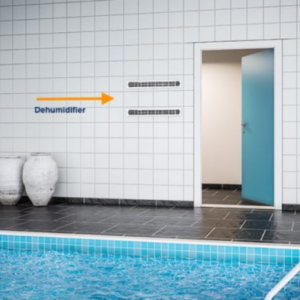
(pool dehumidification unit)
Initial Investment: Purchasing Your Dehumidifier
According to my research on the subject, when considering the initial investment for a dehumidifier, I should expect to spend anywhere from $100 to $300 depending on its capacity and features. For bigger spaces or upgraded models like those with smart technology or high-efficiency ratings, the price range can go beyond $500. Therefore, I must keep in mind that better brands are more likely to have higher prices while also giving better results and lasting much longer over time. Also included in this is other potential expenditure such as installation (if required) and maintenance which includes filter replacement and periodic servicing for efficient machine functioning. With careful consideration of my alternatives together with personal needs, I will make an informed purchase that meets both my budget and humidity control requirements.
Ongoing Maintenance and Operational Costs
I need to also plan for ongoing maintenance costs if my dehumidifier will operate properly over time. Regarding operational costs, they generally range between $30-$100 annually which mainly depends on how often it is used as well as local electricity rates. Since newer models tend to be more energy-efficient than previous ones, I will observe the energy consumed by my unit during operation. Note: regular cleaning every three months and water tank cleansings at least once per month are important for avoiding fungi & bacterial propagation blocking up pipes etc., these may entail some small expenses of purchasing supplies for you. Finally, also consider what you should set aside just in case repairs become necessary, primarily when your unit gets older, thus needing expert checkups done on it. These expenses can be proactively managed so as not only to ensure proper air quality inside my house but also to enable greater effectiveness of a dehumidifier.
Energy Savings and Long-Term Benefits
By investing in an energy-efficient dehumidifier, not only do I address my immediate humidity control needs, but there are also considerable energy savings as well as long-term benefits. Modern-day models are designed with energy-efficient technologies like variable speed motors and moisture sensors, which can save up to 30% on electrical consumption vis-à-vis older versions, according to research and data obtained from sites of the prominent industry players. This translates into smaller utility bills, thus allowing me to recoup my investment quickly. Moreover, another reason why I should maintain proper humidity levels in my home is that it will prevent the growth molds and structural damages that may cause premature aging of both the dehumidifier and building materials used for construction of your house. Therefore, having a good unit will also be consistent with my financial goals as well as health plans in the future.
Frequently Asked Questions (FAQs)
Q: What is a pool dehumidification unit and why is it important for an indoor pool environment?
A: A pool dehumidification unit refers to a system for maintaining appropriate humidity levels within enclosed pools. It is necessary as it helps prevent rusting and molding and also keeps the air clean, thus making the place comfortable and safe for people who use such facilities.
Q: How do indoor pool dehumidification systems work?
A: Indoor swimming facilities moisture extractors function by sucking out surplus dampness from the atmosphere. They achieve this by cooling down incoming air below its dew point so that water vapor in it condenses into droplets which can be easily drained off before reheating and back again into the hall through special channels or ducts designed for that purpose besides heating up pool water sometimes.
Q: What are the benefits of using a swimming pool dehumidifier in a spa or indoor pool area?
A: The utilization of dehumidifiers within spas or other places with enclosed swimming pools plays a significant role in preventing condensation, hence reducing chances of mildew formation, which might compromise structural integrity. At the same time, it provides comfort to users and safeguards them against respiratory complications, thus protecting HVAC energy efficiency levels.
Q: What are the different types of indoor swimming pool dehumidifiers available?
A: Various models exist, ranging from SelectAire™ through SelectAire Plus™ to ExpertAire™ Horizontal series, each with different capacities suitable for diverse sizes and requirements found within aqua parks indoors, among other places.
Q: How can installing a pool dehumidification unit impact energy costs?
A: Installing this type of device could lead to savings on power bills due to efficient control over humidity levels, thereby lowering demands made by HVACs, especially those meant for large spaces like sports halls, where several pools may be kept under one roof. In the absence of such equipment, such rates would translate into high electricity consumption rates.
Q: What maintenance is required for indoor pool dehumidification systems?
A: These need to be serviced regularly. Thus, filters must be cleaned frequently, coils checked, and fans inspected since they are among parts that may accumulate dust or mud, hence affecting their performance. Also, such devices usually have humidistats that should always work correctly while monitoring overall operations periodically for better efficiency.
Q: What is the significance of using dehumidifiers in indoor aquatic facilities?
A: The use of these gadgets within buildings containing swimming baths is very important because it helps maintain the right balance between dryness and wetness necessary for health reasons. In addition to reducing structural damages caused by dampness, it also ensures customer satisfaction as far as comfort levels are concerned during their stay at such places.
Q: How does a swimming pool dehumidification system improve the pool environment?
A: The presence of this kind of system contributes to creating an atmosphere around pools that has less moisture content, thereby minimizing condensation. This prevents growths like molds or mildews, which could lead to respiratory infections, among other ailments. Thus, it also makes people healthy while swimming there.
Q: What factors should be considered when selecting a dehumidification system for an indoor pool area?
A: Size matters a lot, so one needs to look at how big the space is before settling on any model. One also needs to take into account the volume capacity required depending on the number of users per day and whether it’s used continuously throughout the week, considering further aspects like energy conservation integration with HVACs, among others.


