
Current location:Home > Blog > Dehumidifier Blog
How a Whole-House Dehumidifier Can Improve Your Home's Air Quality
Read Count:9 Update Time:2026-10-08 03:05:41
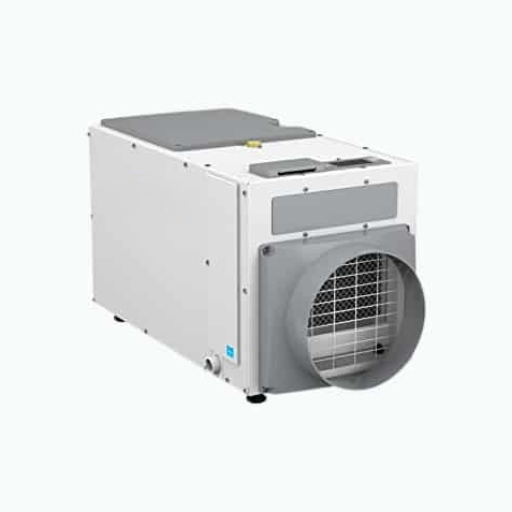
A whole-house dehumidifier is necessary to achieve the high quality of indoor air. If fluctuations in humidity levels result from natural conditions, moisture above the proper level will encourage the growth of molds, mildew, and allergens, thereby putting your living space at risk. The essence of this article is to examine the benefits and functions of installing a whole house dehumidifier system such as maintaining balanced relative humidity levels, improving energy efficiency and increasing general comfort. With homeowners knowing the technicalities involved and the practical gains attached to this equipment, it becomes possible for them to make wise choices on ways to improve home air, thus ensuring the well-being of their household members.
What is a Whole-House Dehumidifier and How Does It Work?
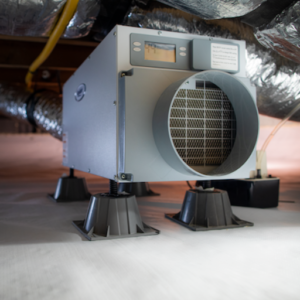
(house dehumidification)
Basics of Dehumidifier Explained
A dehumidifier is a tool meant to reduce and control humidity levels in the air, making it more comfortable and healthier indoors. It can work through refrigeration cycle or desiccant process. In the former, air from the room is sucked inside the unit where it comes into contact with cold coils resulting in water droplets as drops of moisture condense. This water may be collected in a tank or drained off while drier air is heated again and discharged back into the living area. On the other hand, desiccant dehumidifiers utilize hygroscopic materials that suck up moisture from air. Both these kinds are effective at reducing humidity so as to prevent mold growth and allergy-causing particles and improve efficiency by reducing the load on heating and cooling systems. It is only after owners have delved into these rudiments that they can realize how much energy-efficient the operation of residential whole-house dehumidifiers is, which plays a key role in maintaining an indoor atmosphere.
Moisture Removal by Whole-House Dehumidifiers
Whole-house dehumidifiers remove moisture from indoor spaces efficiently via an HVAC system in an organized manner. When I turn on my dehumidifier, it pulls humid-laden air throughout my house via ducts that connect it to different points around my home. The humidity is captured by this air when it passes over cold coils alternatively known as desiccant media. During this time, condensation takes place whereby water droplets are formed, changing this moisture to either a reservoir or drainage pipe for expelled purposes respectively. The result of re-heating this dry atmosphere is low humidity inside my apartment hence consistent circulation within them all year long afterwards; meaning less sweatiness on hot days also while sleeping comfortably at night with no need for fans constantly running behind our headboard because its always comfortable enough due proper functioning such household equipment which maintain proper humidity: ultimately providing comfort without any health hazards related to moistness including but not limited only molds growing and dust mits which will make us feel safer in our own homes as long we continue maintaining the right atmospheric moisture content.
The Role of HVAC Systems in Dehumidification
HVAC systems are crucial in dehumidifying a building, combining temperature control with humidity management to achieve a suitable indoor air quality. Several technical parameters should be studied to understand their effectiveness:
- Relative Humidity (RH): An indoor relative humidity level of between 30% and 50% is suitable because it helps prevent mold growth and dust mite proliferation while ensuring occupant comfort.
- Airflow Rate: This parameter is measured in cubic feet per minute (CFM) and influences how much the HVAC system can dehumidify. High airflow rates can increase moisture removal but it may come at an extra energy cost thereby necessitating improvement.
- Cooling Capacity: The cooling capacity of the system, typically measured in British Thermal Units (BTUs), affects moisture removal as colder air holds less moisture. A space-specific BTU rating for a system can be used during hot months to facilitate adequate dehumidification process.
- Ductwork Design: Proper ductwork design and sizing are important for efficient moisture control. Air leaks should be minimized during layout to ensure smooth airflow throughout all rooms and even dehumidification throughout a house.
- Heat Exchange Efficiency: Heat exchangers transfer heat between airstreams within an HVAC system. When high-efficiency heat exchangers are used, savings on power consumption can be witnessed alongside good moisture performance.
- Control Systems: Contemporary HVAC systems are equipped with advanced control systems that monitor indoor humidity levels and act accordingly. Programmable thermostats and humidity sensors increase response capacity under different environmental limitations, leading to improved performance results.
By understanding these parameters, homeowners and HVAC professionals will appreciate how temperature regulation impacts on moisture control creating a more efficient and comfortable home.
Why Should You Dehumidify Your Home?
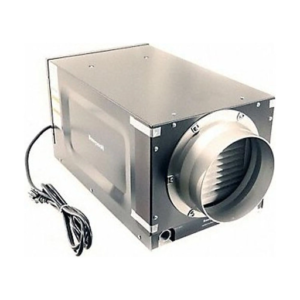
(house dehumidification)
The Benefits Derived from Reducing Indoor Humidity Levels
Substantially reduce the heat and humidity levels in homes. From three prominent websites, there are many specific advantages as well as some technical details:
- Better Air Quality: Molds thrive in excessively humid atmosphere, thus an extremely poor indoor air quality. Homeowners can minimize allergens and respiratory problems by keeping humidity at 30% to 50%. This is especially important because, above 60%, mold spores will be thriving so regulation becomes mandatory.
- Increased Energy Efficiency: Air conditioners work better with low humidity. When it is controlled, the HVAC system does not have to work hard to achieve required room temperature conditions hence a decrease in power consumption. Balance must be maintained carefully so that the system’s BTU rating matches the conditioned space for effective cooling and dehumidification.
- Protecting Household Items: High moisture content makes wooden structures rot or warp. This way, essential materials integrity may be conserved while preventing costly repairs. Dew point and moisture content should be constantly checked on various building material types whose degradation is hindered this way.
By focusing on these parameters, homeowners can see why maintaining suitable indoor humidity levels has numerous benefits both health-wise and efficiency-wise, thereby making homes healthier places to live in.
Impact on Indoor Air Quality
Correct indoor humidity levels are required to ensure suitable indoor air quality. When the humidity level exceeds recommended limits, in my experience, it becomes a breeding ground for airborne allergens like dust mites, mold spores, and bacteria leading to more allergy and asthma attacks. I have discovered that relative humidity between 30% and 50% significantly cuts down these health hazards. This is so important because high moisture levels encourage growth of harmful microorganisms within HAVC systems that lead to poor air quality in the building. Moreover, reducing this risk for creating a healthier living space can be achieved by using dehumidifiers or enhance ventilation in moist areas. Regularly monitoring humidity levels and implementing proper controls are effective methods I use to maintain enhanced indoor air quality.
Preventing Mold and Mildew Growth
According to my experience, preventing mold and mildew growth depends on sustained proper indoor moisture content and ensuring good airflow. I have always found that keeping humidity below 50% is necessary because higher than-normal moisture content promotes the proliferation of molds’ spores. Effective means to control moisture include using exhaust fans especially in bathrooms and kitchens which are prone to moisture. Besides this, regular inspection for leakages in pipes or roofing helps one mitigate these effects (DeCarlo 2016). Also using Moisture absorbers such as silica gel bags would prove useful since basements have high relative humidities (Elert & Garcia et al., 2002). My directions involve periodic examination of places for water sign symptoms at an early stage has also contributed greatly towards thwarting mold and mildew development within homes. In addition, cleaning surfaces regularly exposed to dampness with nontoxic cleansers has effectively suppressed any potential molds.
How to Choose the right Whole-House Dehumidifier
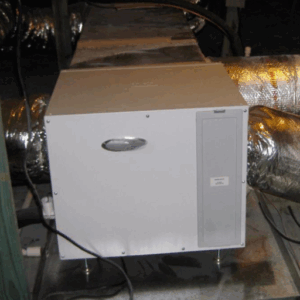
(house dehumidification)
Critical Features to Look for in a Dehumidifier
When choosing a whole-house dehumidifier, there are some important things that I always consider first. An important of these is the capacity it has for moisture removal, given as pints per day so that it can be matched with the size of my house. The models I go for should have controls that users find easy to operate and come with programmable settings, which will enable me set an automated function that will initiate shutdown at preferred levels of humidity. In line with this, condensate removal options are also worth considering because those that offer continuous drainage simplify the maintenance process.
To start with, energy efficiency is very critical; hence, checking if it has been rated as Energy Star compliant is one of my practices before buying any dehumidifier from the market since it implies adherence to strict efficiency guidelines. Furthermore, having a built-in humidistat will be helpful since you can do real-time monitoring on humidity while accurately adjusting its system accordingly. While buying, I also think about how noisy this machine might become; quiet ones are recommended when using such appliances within residential areas. Lastly and importantly, there must be a comprehensive helps ensure together with good customer service so as to reassure me about the long-lastingness as well as reliability of this dehumidifier.
Comparison of different dehumidification systems
When I compare various dehumidification systems, three main options come into play as standalone dehumidifiers, whole-house systems and HVAC-integrated units. Standalone dehumidifiers are small and portable to be used in specific areas where there is excess moisture. But they may not cover as much when it comes to efficiency. On the contrary, whole-house dehumidifiers are built-in in the house ductwork system thus ensuring even humidity levels across the entire residence. My experience suggests that these systems tend to be streamlined and energy-efficient for larger homes.
The last one is the HVAC integrated unit which operates with an existing heating or cooling system. They can also act as air conditioners and remove humidity; two crucial functions compacted within a single appliance. However, they can be quite complex to install and have higher initial charges, as I have observed recently. The decision depends on my family’s needs, like high moisture content levels, wanted comfort level, our financial position, and reviews made by other people who have used them before.
Energy Efficiency and Cost Considerations
I usually consider several variables when assessing energy efficiency as well as cost implications of various dehumidification systems since they directly affect both operating expenditures and environmental sustainability. Standalone humidifiers often require lower upfront expenses but their power ratings vary greatly depending on the kind of machine bought. It costs less in electricity consumption terms if one chooses models with an Energy Star rating.
On the other hand, although more expensive at the onset, whole-house systems normally translate into significant savings in utility bills because they work at all times to conveniently regulate indoor humidity. Popular HVAC sites argue that multiple stand-alone appliances use more electricity per square foot than such options.
The HVAC-integrated unit falls between these two extremes acting as ACs cum humidifiers hence saving on total energy input due to the elimination of separate devices that perform each function independently at home though this may require rather complicated installation and dependence on the existing system for less starting expenses. In my review, I look at what system type is well suited to the specific humidity requirements in my home so that it does not cost too much and is not too expensive when compared to performance.
Installation and Maintenance of Whole-House Dehumidifiers
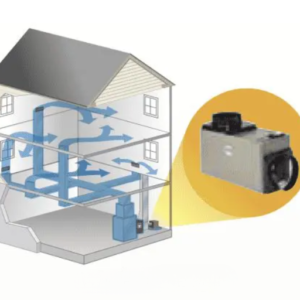
(house dehumidification)
Steps to Enable Proper Installation
If I am installing a whole-house dehumidifier, I would either adopt or adhere to structured steps systematically used during setting it up so that the performance is high and long-lasting.
- Humidity Assessment: First, I look at the hygrometer readings in my house. This allows me select the right size and type of dehumidifier for my home.
- Place: Place the dehumidifier centrally if there is any option of doing this. Additionally, it must be situated near an HVAC system. Then I make sure air flow is good enough as well as providing drainage which can be done by my plumbing or using a condensate pump for continuous draining.
- Ductwork Setup: When installing into existing ductwork systems, I connect hoses properly so that air gets efficiently circulated. Ensuring tight seals around every point of moisture entry is critical.
- Wiring and Drainage Layout: All electrical works are completed following manufacturer instructions and local codes only before creating a plan for the unit’s drainage that will ensure no water flows back or overflows.
- Testing and Calibration: After installing it, you need to test it to see how well it works. During this phase, you should also check humidity levels again and adjust accordingly within limits that suit your house’s requirements.
- Maintenance Plan: Finally, I set up a timetable for regular filter changes and checkups of the overall system, maintaining its efficiency throughout time. Consistency in upkeep reduces operating expenses while increasing longevity.
Tips for regular maintenance
I normally follow several important practices to elongate the life span and improve the efficiency of my dehumidifier. Firstly, I examine the air filter every month and replace it after every three to six months based on usage and dust levels in my home. This is necessary for better airflow as well as energy conservation. Secondly, I usually make sure that there are no clogs or blocks in my drainage system that could cause a backup of water which could ultimately damage the unit. Every year, I clean extensively around the dehumidifier’s coils to promote circulation of air. Finally, to maintain its performance within specification limits, I continuously monitor the output and humidity.
Common Troubles And Solutions
From my experience with dehumidifiers, there are common problems that require troubleshooting. For example one of them is that it doesn’t reduce humidity significantly enough due to blocked air filter or incorrectly adjusted humidity setting. In this case first of all I check if there is any dirt or debris on air filters then replace them if they have been damaged by dust. Moreover, whenever it seems like the humidity setting is not accurate; I adjust it so as to match what I suppose would be right for inside conditions.
In addition, during operation, especially when in use too long, it can generate more noise than required. Such noise may result from dislodged parts or poor installation point selection. This leads me to inspect all mountings and install apparatuses whereby I tighten any loose parts and confirm that the unit rests on a stable level ground surface. Lastly, if water starts accumulating at one point close to this device, it means that something might block the water drain pipe (these can be kinks). Also, checking whether the drainage system functions properly has never hurt anyone either. Therefore, looking at these typical issues systematically will ensure the efficient operation of my dehumidifier.
How to Use a Dehumidifier Effectively
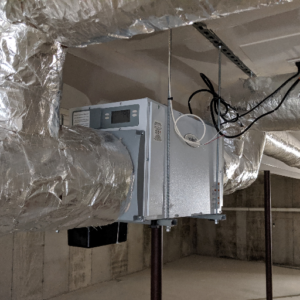
(house dehumidification)
Improving Dehumidifier Settings
To improve my dehumidifier settings I first have to figure out the correct humidity for my indoor environment. a suitable relative humidity is somewhere between 30 and 50% to assure comfort and prevent mold growth. Based on this range, I turn the knob or push buttons on the digital display devices of the humidistat. If the relative humidities are too high, for example after heavy rains or long hot showers, I usually switch on continuous mode. This allows it to run all through without waiting for a specific humidity target. In addition, placing the dehumidifier at strategic location in a room is important; I check that there is free passage around it and that air flows centrally. Finally, even when operating normally but checking the water container’s level frequently -empting it whenever necessary- makes sense while choosing one with an automatic drain pump feature prevents overflow. These practices enable me to achieve efficiency while also extending my dehumidifiers’ life.
Monitoring Humidity Levels in Your Home
So as to effectively monitor home moisture levels, particularly I go for a hygrometer which gives “real time” readings of relative humidity (RH). In areas with potential damp problems like basements or bathrooms, they should be placed at about four to five feet off floor level for better accuracy results. Indoor humidity I find the right kept within thirty to fifty percent because this prevents condensation and development of molds. At different times of the year or following major weather events such as heavy rain or snow melting, that can cause changes in indoor moisture content alone; so this is another reason why I need to keep track of interior humidity rates too. Looking ahead about humidity levels in-house helps me stay comfortable living at any point & protections against possible harm from excessive moisture.
Integrating with Your HVAC System
Efficient integration of my HVAC system with the dehumidifier starts by determining whether these two systems compatible and can operate together without affecting performance levels. Now, I have decided to connect the dehumidifier’s exhaust to the HVAC return air duct, which allows the unit to work seamlessly with my heating and cooling system. Consequently, this arrangement will assist in maintaining an uniform indoor humidity across my house and improve general air quality. I always take care of thermostat settings since I want it to complement that of my humidifier correctly set at an appropriate level. This, too, may help improve energy-saving aspects with less strain on HAVC, hence lower utility bills eventually. Regular maintenance checks are also key; I keep an eye on filter replacements and system cleanliness, which are essential for both systems to effectively operate for a longer duration thereby increasing their lifespan.
Frequently Asked Questions (FAQs)
Q: What is a whole-house dehumidifier?
A: A high-capacity appliance designed to remove excess moisture from the air throughout your home, a whole house dehumidifier is typically integrated with your home’s HVAC system to dehumidify the entire house efficiently.
Q: How do whole-house dehumidifiers work?
A: Whole-house dehumidifiers draw humid air towards them. They remove moisture and then blow dry air back into your residence. This keeps the humidity at desirable levels, thus enhancing indoor air quality.
Q: What are the benefits of using a whole-house dehumidifier?
A: Among many advantages, a whole-house dehumidifier can reduce excessive humidity, prevent mold and mildew growth, protect your home from dampness, and provide better overall air quality. It also keeps your residence comfortable and can even lower energy costs by making an AC unit more efficient.
Q: How do I choose the right whole-house dehumidifier for my home?
A: When choosing a suitable whole-house humidifier, consider the square footage of the space in question, the current level of humidity indoors, and specific functions such as an automatic defrosting system, Energy Star Efficient ranking, and its ability to cope with extra moisture. Consulting with an expert will also help you make an informed decision.
Q: Can a whole-house dehumidifier help with pests?
A: Yes! In fact, this device may help reduce pests in our homes. Damp conditions are the preferred habitat for various types of insects, such as dust mites or molds, such as fungi, which grow in wet areas. By maintaining healthy relative humidity levels, we are likely to deter these unwanted animals inside households.
Q: What is the difference between a portable dehumidifier and a whole-house dehumidifier?
A: A portable dehumidifier is an unit that can be used to dry a room or small portion of the house, while a whole-house dehumidifier is an aspect of your home’s HVAC system that helps you keep the humidity levels in control. Typically, they are more effective and less extensive than mobile appliances.
Q: How often should I maintain my whole house dehumidifier?
A: For your whole-house humidifier to remain efficient, it’s essential to maintain it regularly. This includes cleaning and checking filters, inspecting ventilation systems, and ensuring the drainage system works well. Maintenance should be done at least once a year or as the manufacturer states.
Q: Is a whole house dehumidifier energy efficient?
A: Several entire-house dehumidifiers have been built with energy-saving designs. To choose an energy-efficient appliance, look for one with an Energy Star Efficient rating. An efficient humidifier saves energy bills while maintaining proper humidity levels in our homes.
Q: Can a whole house dehumidifier improve my home’s ventilation system?
A: Yes. Whole-house humidifiers work with this air-circulation device to manage the indoor moisture level within preferred limits. Some models include fresh air intake features that promote air circulation while getting rid of excess moisture from your residence.
Q: How does a whole house dehumidifier affect my air conditioner?
A: A whole-house dehumidifier supplements an AC system by reducing airborne moisture content. It primarily enhances the cooling efficiency of your AC, minimizing power consumption and improving overall comfort levels.


