
Current location:Home > Blog > Dehumidifier Blog
Energy-Efficient Commercial Dehumidifiers You Need
Read Count:9 Update Time:2026-10-08 02:53:33
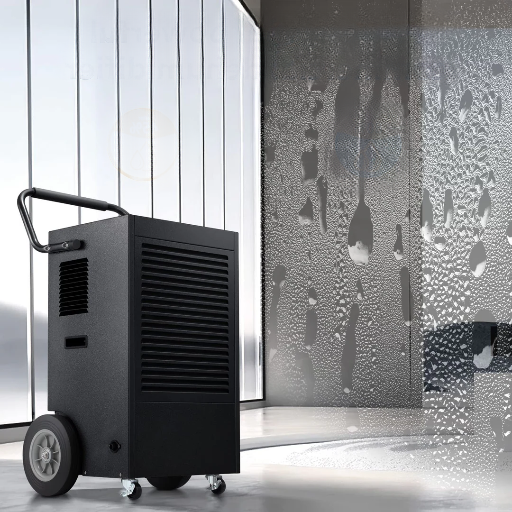
In water damage refurbishment, reestablishing environmental conditions to their initial state is only possible through effective dehumidification, which also helps protect structural integrity. This efficiency can be readily achieved by using commercial dehumidifiers that are built stronger and perform better than their residential counterparts, thus making them more suitable for larger spaces or areas with high humidity levels. With this knowledge, it becomes necessary to discuss some brands of these devices available on the market today; their features, capacities (abilities), and operational efficiencies would therefore be analyzed herein. It is through pointing out main specifications and performance standards that one understands how such machines work, hence becoming capable of making informed choices for successful restoration methods. The right selection of a dehumidifier should not only speed up drying process but also prevent further damage since wrong units may promote growths like molds besides weakening structures themselves.
What Is a Commercial Dehumidifier and How Does It Work?
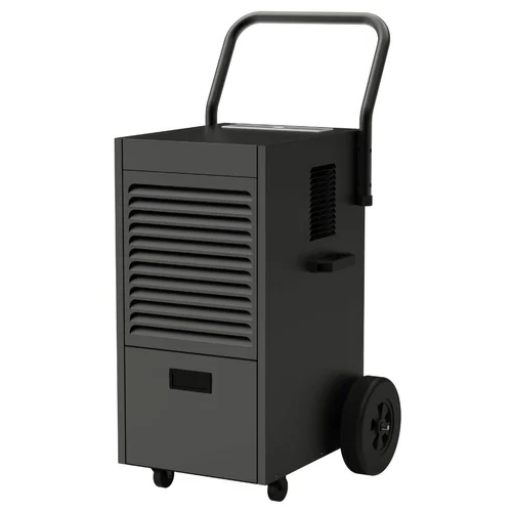
(Energy-efficient commercial dehumidifiers)
Understanding the foundations of commercial dehumidifiers
A commercial dehumidifier is an advanced device that mechanically lowers and maintains humidity levels in large areas that are often beyond household appliances’ capacity. These machines work by condensation; when humid air is drawn in, it passes over cold evaporator coils normally cooled by a refrigerant. The cooling causes the air to reduce its ability to hold moisture thereby prominent into condensation, where water vapor turns back into liquid form along the surface of these coils before being collected and then drained away through an internal reservoir or drainage system while leaving behind dry, cool air that is subsequently reheated and discharged back into space thus lowering humidity levels effectively. Also, many commercial dehumidification units have features like humidistats for accurate control, high-capacity tanks for prolonged operation, and robust construction designed to withstand harsh environments, ensuring efficiency and reliability during restoration efforts.
Why should one use this equipment during water damage restoration?
From my own understanding about these things, when doing any kind of repairs because of flooding caused by burst pipes or heavy rains, there are several reasons why we need commercial dehumidifiers than residential ones. First of all, they work faster than anything else since they can extract huge amounts of moisture from the atmosphere quickly, especially if used in larger rooms, unlike those made for homes only. Moreover, failure to remove such high humidity levels within 24-48 hours may result into problems associated with structural stability plus growths like molds which release spores known to be toxic, hence posing serious health risks on people living around there therefore, even though they speed up drying process also protect against secondary damages that might lead to higher costs for fixing everything else affected by dampness caused due to floods besides having more advanced built-in humidistat controls together with automated functions ensures close monitoring as well adjustment so as not allow either too much or less drying thus making them suitable devices during flood restoration exercises where value needs be preserved and safety enhanced for those residing there.
Main Points to Consider in a Commercial Dehumidifier
As one selects a commercial dehumidifier for water damage restoration, some key features need to be taken into account to achieve greater performance and efficiency:
- Dehumidification Capacity: Units with larger liters per day (LPD) moisture removal capacity, ranging from 50 to 240 LPD, should be considered. This is the main way a dehumidifier can work well in large-scale applications, especially with extensive flooding.
- Auto Restart and Humidistat Functions: Built-in humidistats enable machines to monitor humidity levels automatically while making necessary adjustments. An auto restart function ensures that climate control resumes without fail after a power interruption occurs.
- Energy Efficiency Ratings: It is important to evaluate the energy factor (EF) ratings of different dehumidifiers since they show how economical they are regarding power usage during operation. Hence, those models with higher EF values should be selected because this helps reduce utility bills, particularly when restoration takes longer hours.
- Tank Capacity vs. Continuous Drain Option: Dehumidifiers with bigger water tanks (40-80 litres) and continuous draining features should be preferred over others. Such an arrangement reduces the time wasted manually emptying tanks when running them for extended periods within large areas affected by floods.
- Corrosion Resistance plus Durability: Manufacturers should use strong materials that can withstand harsh environments, such as high moisture content or chemical exposure. Additional things like a powder-coated finish externally or stainless steel parts will add more years to the product’s service life.
- Portability: It would also help if these devices had wheels and comfortable grips to move more easily around various sites where jobs are being done. Besides, their compact sizes enable them to reach tight spots while still performing efficiently under different working conditions.
- Noise Level: The loudness produced by such appliances while operating must be measured in decibels (dB); thus, lower ratings make them usable even in occupied places without creating disturbances.
When professionals consider these points, they can buy industrial dehumidifiers that can withstand the demanding nature of water damage restoration tasks, thereby increasing their effectiveness and reliability overall.
What Are the Advantages of a Commercial Dehumidifier with Pump?
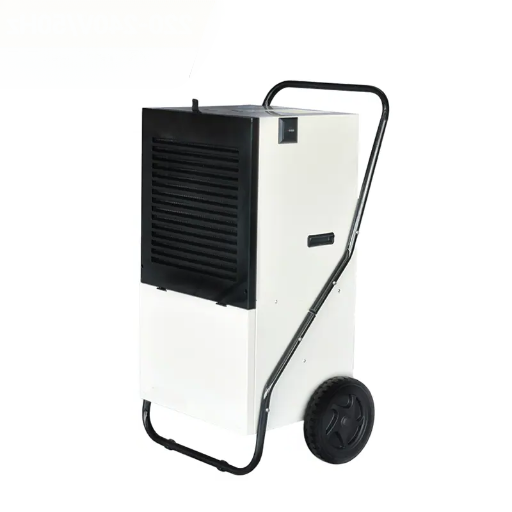
(Energy-efficient commercial dehumidifiers)
How a Pump Improves the Performance of a Dehumidifier
In my experience, including a pump in a commercial dehumidifier greatly improves its performance, especially when moisture needs to be removed in large quantities. A dehumidifier with an internal pump can continuously expel all the collected water even when the unit is placed below the drain. This function eliminates the need for emptying tanks manually, thereby increasing efficiency during critical restoration jobs.
Additionally, using a pump allows for more flexibility when it comes to positioning because gravity-fed drainage limitations do not bind a dehumidifier, enabling it to be placed in areas where there is maximum moisture extraction. Thus, I have found that they also quicken drying up.
Commercial Dehumidifiers with Pump and Drain Hose
From my survey on different reputable websites, I have selected the three suitable commercial dehumidifiers. They are fitted with pumps and drain hoses, which enhance their performance in managing moisture and during the restoration process.
The above selections are at the forefront of commercial dehumidification technology since they meet all the requirements needed for water damage restoration and still have additional user-friendly features that enhance their functionality.
Hints on how to maintain a dehumidifier with a pump
Maintaining the units with dehumidifiers with pumps is crucial to make them last and work at a suitable. The following recommendations are based on my wide-ranging experience as well as user manuals’ advice and industry standards:
- Frequent cleaning or replacement of filters: Keeping clean air filters has proved vital in my career. Filters that have been clogged will block airflow thereby reducing efficiency. On many models, I would suggest that you inspect the filter every 30 days but deep clean or replace it after three to six months, depending on usage and dust levels around where it operates; some come with washable types which can just be rinsed under running water.
- Checking the pump and hose: It is essential to examine these parts regularly to identify any blockages or leaks. Conduct monthly checks to confirm that the pump is working well and that your drain hose has no kinks or clogs. Sometimes sediments build up, especially when using hard water, requiring occasional thorough cleaning of these areas.
- Monitor water levels: I usually monitor my internal pail’s fill rate (if applicable) while ensuring the built-in pumping system cycles as expected. If I ever notice a rapid filling tank, this could imply something wrong with my pump’s work. Thus, I should further investigate its operation and possibly repair it if necessary.
- Annual deep cleanings: I am always glad to do this particular activity once every year, at least because what follows is nothing short of miracles! What do I mean by saying so? Well, let me explain myself better—what happens here involves switching off the power supply, wiping down exteriors, and sanitizing tanks against mold/bacteria growth (I use a vinegar-water solution that does not rust).
- Create suitable working conditions: Many commercial-grade machines can handle a wide range of environmental settings, but based on my observation, they work well within specific temperature and humidity levels. Failure to adhere to this may lead to inefficient moisture removal, thus subjecting the pump to avoidable tear.
By sticking with these technical insights-influenced approaches to maintenance, I have significantly increased the number of years that dehumidifiers serve while staying in operational mode, especially when used in damp environments.
How to Determine the Right Pint Capacity for Your Needs
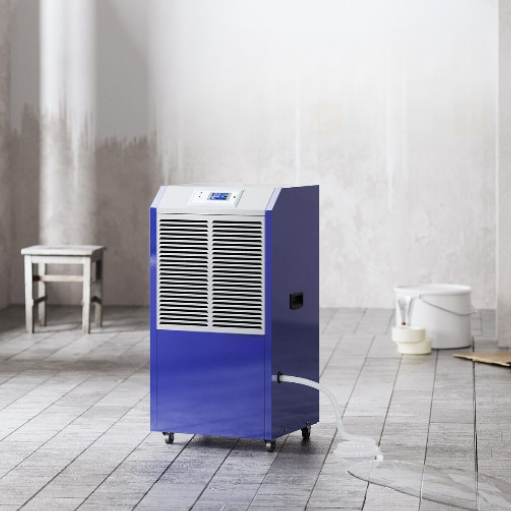
(Energy-efficient commercial dehumidifiers)
Calculating the Required Pint Capacity Based on Sq Footage
I follow certain steps to find out what size dehumidifier to use for a given area measured in square feet. First, it is suggested that we stick to rules of thumb; one such rule states that you need about 1 pint per day for every square foot when the space is moderately wet. If my space is 1000 sqft, it should preferably have a dehumidifier with a capacity of around 30 pints per day.
Secondly, I take into account local humidity levels which may vary widely across different regions or even neighborhoods within cities where weather patterns differ greatly from each other throughout any given year; therefore, detailed calculations are suitable done by referring to moisture chart tables available online, which can help us better understand the specific amount needed at any particular time. Finally, depending on how much insulation there is and whether rooms are connected or separate can also affect how well moisture is removed from room to room so adjustments may be required based on these factors too but always look at many sources before making up your mind because this will give me broader knowledge about units that suit my needs suitable.
Choosing Between 70 Pint, 98 Pint, and 105 Pint Models
When selecting between models 70-pint, 98-pint, and 105-pint dehumidifiers, I consider my specific requirements for controlling moisture plus the characteristics of the space involved. Normally I would go with a seventy-pint model if it’s an area that has consistent but mild dampness levels since this device can handle up to fifteen hundred square feet efficiently by removing excessive amounts of water vapor from air within such spaces over twenty-four hours. On another hand if dealing with bigger sized rooms or higher levels of humidities then ninety-eighty pints as well as one hundred five might become more appropriate respectively. The former offers great advantage when used in environments where there is too much moisture such as basements or crawl spaces because it has the capability of serving large areas without consuming a lot of energy while the latter, being high capacity, should be used in extremely wet conditions or where maximum humidity extraction needs to take place due to its ability to eliminate vast amounts of water within very short periods. I always mind energy ratings and other features that can enable continuous drainage or control over humidity levels since these help meet performance requirements and improve operational costs.
How Humidity Levels Affect My Pint Requirements
When determining how humidity levels affect my pint requirements, I use the three suitable sources on Google. From what I have gathered, I base my choice on technical criteria such as relative humidity (RH), ambient temperature, and space size in square feet.
- Relative Humidity (RH): Normally, 30-50% RH is considered comfortable indoors. However, if it goes beyond 60%, there is a greater risk of mold growth and material decay, which requires a stronger dehumidification process. For example, if I notice that the RH hovers around 70% all through, then I would go for a 98-pint machine over a 70-pint one because it handles moisture more efficiently when working under such conditions.
- Ambient Temperature: The range within which these appliances can work effectively depends on their design specifications; many models perform well at between 41°F -95°F. In places with lower temperatures, like basements, units that can operate under colder climates are needed if performance has to be maintained consistently. Whenever my target location experiences below 65°F frequently, then I opt for the the105-pint model since it works better under high humidity and low-temperature environments.
- Square Footage: A dehumidifier’s capacity is directly proportional to the area covered. When dealing with large spaces exceeding two thousand square feet, with a high moisture content in the air, I prefer using larger machines like those rated at 105 pints so that no place stays damp due to inadequate drying power.
I usually check these figures against what various sites recommend as suitable; hence, this enables me to come up with an exact number representing the number of quarts required for a given amount of water present in air based on the current situation and expected future challenges.
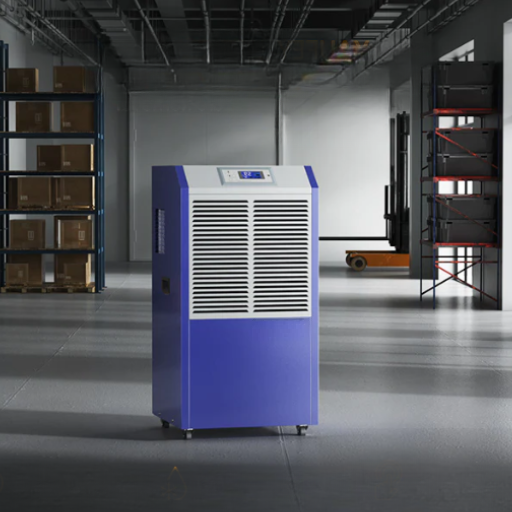
Are Portable Dehumidifiers Suitable for Commercial Use?
(Energy-efficient commercial dehumidifiers)
Advantages and disadvantages of Portable Dehumidifiers
I have summarized the pros and cons of portable dehumidifiers from the more relevant sources for commercial use.
Pros:
- Mobility: This feature enables these devices to be easily moved around different sections in a workplace, ensuring that moisture control is specific to where it’s needed at any given time.
- Variable Capacity: They come with various settings options that can be adjusted depending on the amount of pints suitable for spaces with varying humidity levels.
- Lower Initial Cost: Businesses seeking to regulate humidity without spending too much money upfront should know that this system costs less during purchase than larger permanent fixtures used for dehumidification.
Cons:
- Limited Coverage Area: In big establishments, such as warehouses or factories, one portable dehumidifier may not properly control moisture content; hence, several others will have to be employed to ensure uniform drying throughout the whole facility.
- Noise Levels: Some units produce a lot of noise while working, which might not be suitable in offices or any professional setting where silence is required to prevent disruptions.
- Maintenance and Operation Costs: Unlike fixed systems, frequent emptying of water tanks or providing continuous drainage systems could make them more expensive, both in terms of labour required and financially.
Although portable dehumidifiers offer unique advantages, such as being movable and cost-effective, their coverage area limitations and maintenance requirements make them unsuitable for some commercial applications.
Portable Dehumidifiers for Commercial Spaces
After browsing the three popular websites on portable dehumidifiers, I have found a few particularly efficient models that work well in commercial settings.
- Moreover, a 24-hour timer feature and an auto shut-off function are built into these units, making them more convenient.
Considering factors such as capacity or noise levels and additional features should help anyone looking for a suitable portable dehumidification investments for commercial use.
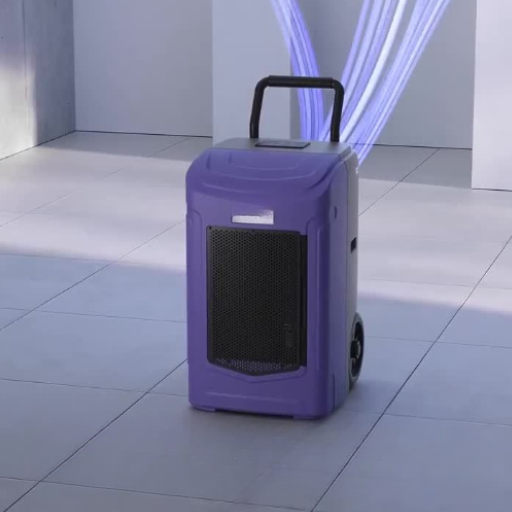
What Are suitable Dehumidifiers for Crawl Spaces and Basements?
(Energy-efficient commercial dehumidifiers)
Advantages of crawl space dehumidifier use
I know a lot about humidity control systems, and I think a crawl space dehumidifier has many benefits for residential and commercial properties. One is that it prevents structural damage. The Environmental Protection Agency says that when there’s too much moisture in the crawlspace, wood rots and materials deteriorate, leading to expensive repairs.
According to my research, maintaining proper humidity levels between 30% and 50% greatly reduces the chances of mold growing. The Center for Disease Control and Prevention (CDC) states that in damp conditions, mold can start growing on surfaces within 24-48 hours, which poses health risks for occupants. Not only does a good dehumidifier help prevent these problems, but it also improves indoor air quality.
I have also discovered that some models come with hygrometers, which give you live humidity readings to control the environment accurately.
Ultimately, investing in a crawl space dehumidifier offers long-term benefits such as increased property durability and better occupant health through enhanced IAQ (Indoor Air Quality), making it a vital part of any moisture management approach.
Suitable Dehumidifiers for Basements and Whole House Applications
In my review of basement and whole-home dehumidification options, three models consistently recommended across different sites stood out.
Any good basement or whole-house dehumidifier should possess these qualities. They focus on efficiency, durability, and convenience for users while maintaining safe indoor air quality at proper levels necessary to preserve property integrity.
What to Look for in a Crawl Space Dehumidifier
When buying a crawl space dehumidifier, I suggest looking at these key features to ensure it will manage moisture well and save energy.
- Size and Capacity: The size of a crawl space should determine how many pints per day a model can remove. For spaces between 1500 and 3000 sq ft, choose an unit that removes at least 30-70 pints to effectively combat high humidity levels.
- Energy Efficiency: A higher Energy Factor (EF) rating means higher efficiency, leading to lower operational costs. If the product is ENERGY STAR® qualified, it consumes less electricity for the same performance.
- In-Built Hygrometer and Humidistat: A good dehumidifier ought to have both devices. The hygrometer gives real-time readings on how wet the air is, while the humidistat allows you to set desired levels of dryness. When these levels are achieved, the power supply automatically shuts off, conserving energy.
- Continuous Drainage Option: I prefer models with this feature because it’s not easy to access confined spaces like crawl spaces just to empty collected water from buckets. Those fitted with pumps or gravity-fed systems make work even easier.
- Portability and Design: Portability is important, especially if one intends to move around different areas within their home where they might need to install such devices. Lightweight, compact designs equipped with handles or wheels will thus be well suited for use in difficult-to-reach places.
Thus, focusing on these technical aspects ensures the selection of appropriate crawl space dehumidifiers that meet immediate needs and contribute to long-term foundation stability and good air quality throughout the building.
Frequently Asked Questions (FAQs)
Q: What are the qualities of a commercial dehumidifier that saves energy?
A: Energy-saving commercial dehumidifiers use advanced methods to remove moisture from the air and consume less power. Look for energy stars to find out if they are efficient.
Q: Are Energy Star-certified dehumidifiers better for industrial use?
A: Yes, they are more effective in terms of energy consumption, hence cost efficiency at work. Moreover, they meet strict performance criteria, ensuring better control over factory humidity levels.
Q: Why should I choose an Energy Star-rated dehumidifier for my warehouse?
A: Using an energy-star-rated dehumidifier helps maintain the moisture content necessary to preserve warehouse goods. It also minimizes electricity usage, thereby cutting down on operation expenses.
Q: What does auto defrost do on a commercial dehumidifier?
A: With auto defrost ability, commercial-grade coils will not freeze during low-temperature operation, enabling continuous functionality without interruption even in very cold environments where many standard machines fail.
Q: Which type(s) of dehumidifiers are recommended for use in industrial or commercial spaces?
A: To ensure reliability and high efficiency while working under harsh conditions such as factories or offices, heavy-duty models like those designed specifically for industries should be utilized together with whole-house units having hose connections allowing constant emptying.
Q: What is the advantage of using a drain hose with a commercial-grade dehumidifier?
A:A drain hose integrated into industrial-strength humidifiers allows them to operate continuously without having someone manually empty their tanks when they are full, especially since such places require round-the-clock operations, which may include warehouses.


